


🎣 Fishing Life
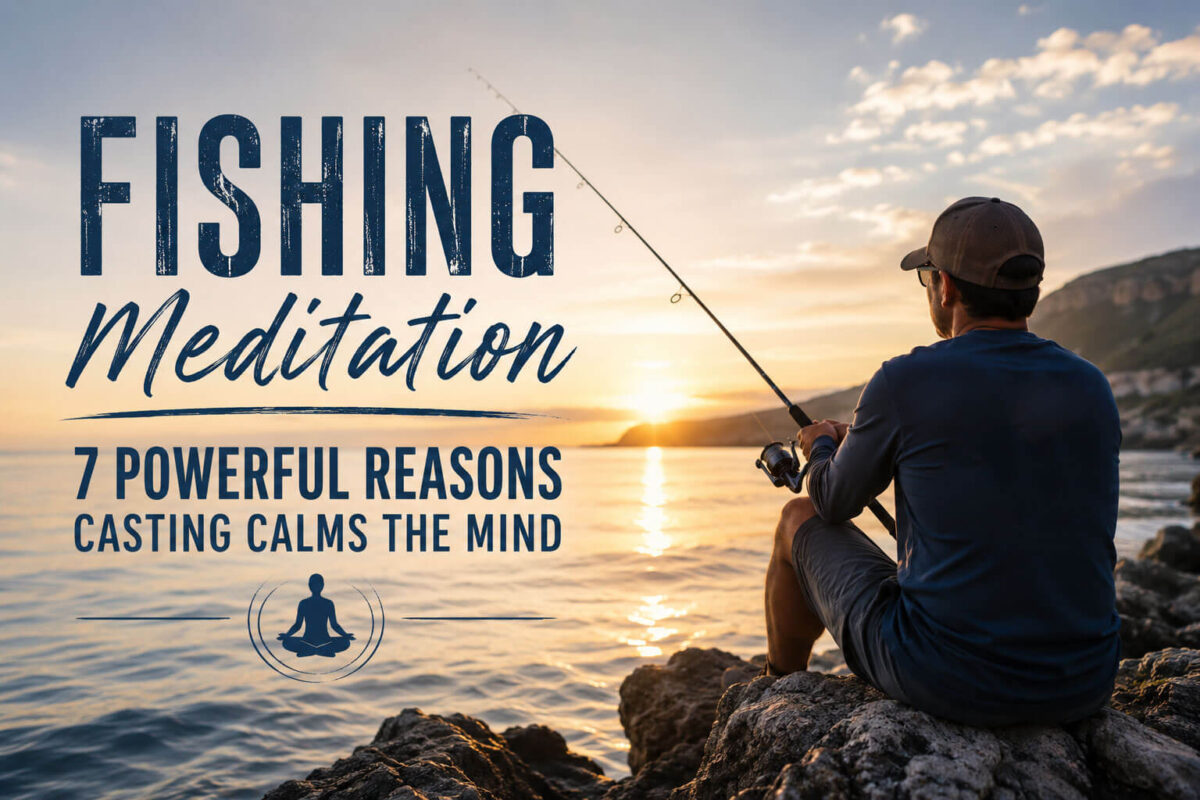
Fishing Meditation: 7 Powerful Reasons Casting Calms the Mind
Jul
Why Fishing Feels Like Meditation
The rod, the water, the silence — a closer look at why casting a line quiets the mind faster than almost anything else you’ll try this year.
What’s in this guide
- Why Fishing Feels Like Meditation
- The Science Behind the Calm
- Types of Fishing & Their Meditative Qualities
- How Mindful Fishing Actually Works
- A Step-by-Step Fishing Meditation Guide
- Gear That Supports the Practice
- Best Places to Fish for Maximum Calm
- Solo vs. Fishing With Others
- Conservation & Deeper Practice
- Frequently Asked Questions
Why Fishing Feels Like Meditation
Ask any longtime angler why they keep coming back to the water, and the answer rarely mentions the fish. It’s the stillness before the first cast, the rhythm of line moving through guides, the way an hour can disappear without anyone noticing it left. This is not a coincidence — it’s the same mechanism that makes seated meditation, breathwork, and slow walking meditative. Fishing meditation isn’t a marketing phrase; it’s a description of what actually happens in the body and brain when a person commits to a repetitive, low-stakes, sensory-rich task near water.
Traditional meditation asks you to sit still and anchor your attention to something simple — usually the breath. Fishing offers the same anchor, but disguised as a hobby. The cast, the drift, the retrieve: each has its own rhythm, and following that rhythm gives the mind a job simple enough to quiet the noisier, more anxious parts of it. Unlike a meditation cushion, though, fishing rewards patience with the possibility of a strike, which keeps the practice engaging in a way pure stillness sometimes isn’t for beginners.
There’s also the setting itself. Moving water, tidal rhythms, and open horizons activate what researchers now call “blue mind” — a mildly meditative state triggered specifically by proximity to water. Combine that with the repetitive motor pattern of casting and retrieving, and you get a near-perfect recipe for the kind of relaxed, non-judgmental awareness that mindfulness teachers spend years trying to train people into.
None of this requires an angler to think about mindfulness at all. Most people who fish regularly for stress relief never use that language — they just know that a rough week gets quieter somewhere around the second or third cast. Understanding why that happens doesn’t make the experience less magical; it makes it easier to protect and repeat on purpose.
The fish is often the excuse. The forty minutes of nowhere-else-to-be is the actual reward.
The Science Behind the Calm: How Fishing Meditation Works in the Brain
Flow State and the Angler’s Focus
Psychologist Mihaly Csikszentmihalyi’s concept of “flow” describes total absorption in a task that’s challenging enough to engage you but familiar enough not to overwhelm you. Fishing sits almost perfectly in that zone. Reading water, judging current, and timing a retrieve require just enough skill to keep the brain’s problem-solving circuits lightly occupied — which crowds out rumination, the looping, anxious thinking that drives most everyday stress.
This is a big part of why fishing feels different from, say, scrolling a phone at the water’s edge. Passive activities don’t demand enough attention to fully occupy the mind, so worry creeps back in. Fishing’s blend of skill and unpredictability is exactly what keeps flow states — and the calm that comes with them — sustained for long stretches.
Alpha Waves and the Rhythm of Casting
EEG studies on relaxed, wakeful attention consistently show increased alpha wave activity — the same 8–12 Hz range associated with light meditation and the moments just before sleep. Repetitive motor tasks performed in a calm environment, like a steady overhand cast repeated for an hour, are known to nudge the brain toward this pattern. It’s a physiological explanation for something anglers have always described in plain language: the “zoning out” that isn’t checking out, but tuning in.
Blue Mind: Water’s Effect on the Nervous System
Marine biologist Wallace J. Nichols popularized the term “blue mind” to describe the mildly meditative, calm-focused state that being near, in, or on water reliably produces. The sound of moving water, the horizon line of open ocean or a lake at dawn, and the specific blue-green wavelengths of light all appear to lower cortisol and heart rate in ways green space alone doesn’t fully replicate. Fishing simply gives people a structured reason to stay in that environment far longer than they otherwise would.
Types of Fishing and Their Meditative Qualities
Not every style of fishing offers the same meditative payoff. Some are built for solitude and repetition; others are more social or gear-intensive, which changes how “quiet” the experience actually feels. Here’s how the most common styles compare.
| Fishing Style | Meditative Quality | Skill Level | Best For |
|---|---|---|---|
| Fly Fishing | Very high — casting rhythm demands full attention | Intermediate | Solo river days, single-point focus |
| Surf Fishing | High — wave rhythm doubles the calming effect | Beginner | Coastal anglers wanting minimal gear |
| Kayak Fishing | High — physical stillness plus water motion | Intermediate | Anglers craving isolation on open water |
| Ice Fishing | Very high — enforced stillness and silence | Beginner | Long, uninterrupted quiet sessions |
| Bank/Pier Fishing | Moderate — accessible but often more social | Beginner | Easing into the practice near home |
How Mindful Fishing Actually Works
Breath and Cast Synchronization
Experienced anglers often unconsciously sync their breath to their cast — inhaling on the backswing, exhaling through the forward stroke. This is the same breath-anchoring technique used in formal meditation, just applied to a physical skill instead of stillness.
Sensory Anchoring on the Water
Mindfulness training often uses the “5 senses” technique to pull attention into the present moment. Fishing does this automatically: the pull of current against the line, the smell of the water, the sound of a lure hitting the surface. These sensory details are constant and immediate, which makes it far easier to stay present than it is sitting in a quiet room trying not to think.
Letting Go of Outcome
A core mindfulness principle is releasing attachment to results. Fishing teaches this by necessity — you cannot control whether a fish bites, only how well you present the bait and how patiently you wait. Over time, this builds a tolerance for uncertainty that carries over into daily life far beyond the water.
- Repetition lowers cognitive load — the more automatic the cast becomes, the less mental energy it takes, freeing attention for calm awareness rather than technique.
- Silence becomes comfortable, not awkward — long stretches without conversation or notifications retrain the nervous system to tolerate quiet.
- Patience becomes practiced, not forced — waiting for a bite is patience training with a built-in reward system.
- Environment does half the work — open water and natural light reduce cortisol independent of any deliberate mindfulness effort.
A Step-by-Step Guide to Fishing Meditation
Arrive Without a Deadline
Leave extra time before you have to be anywhere else. Rushing to fit fishing into a tight window undercuts the entire point — the calm comes from unhurried time, not from checking a box.
Silence Notifications Before the First Cast
Put the phone away, not just on silent. Even the temptation to check it fragments the sustained attention that makes fishing feel meditative in the first place.
Slow the Cast Down Deliberately
For the first ten minutes, cast slower than feels natural. This forces attention onto the motion itself rather than the outcome, which is the fastest way into a flow state.
Notice One New Sensory Detail Per Cast
Water temperature against your hand, the specific sound of the line unspooling, the color shift on the surface. This keeps attention anchored in the present rather than drifting into planning or worry.
Let Long Stretches Without a Bite Be the Point
Resist the urge to treat quiet stretches as wasted time. The stillness between bites is where most of the actual stress relief happens — the catch, if it comes, is a bonus.
Gear That Supports a Meditative Fishing Practice
You don’t need premium equipment to fish mindfully, but a few thoughtful choices remove small frictions that otherwise pull attention away from the water.
Best Places to Fish for Maximum Calm
- Quiet freshwater lakes at dawn — glassy water and low light create a natural, low-stimulation environment ideal for a first attempt at mindful fishing.
- Slow-moving rivers — steady current provides a rhythmic backdrop without the unpredictability of tidal water.
- Remote surf breaks — the sound of consistent wave sets doubles as a natural pacing tool for breath and casting rhythm.
- Mountain streams — tight, technical casting keeps the mind fully engaged, crowding out unrelated thoughts almost immediately.
- Tidal flats — wide-open sightlines and minimal noise make flats fishing one of the most meditative saltwater experiences available.
- Ice-covered lakes — enforced stillness and near-total silence make ice fishing arguably the most concentrated form of fishing meditation.
Solo Fishing vs. Fishing With Others: Two Paths to the Same Calm
Neither approach is objectively better — they simply activate different parts of the same calming mechanism. Solo fishing maximizes internal focus, while shared quiet fishing builds a form of low-pressure bonding that’s difficult to replicate anywhere else.
Conservation, Ethics, and Deepening Your Fishing Meditation Practice
Catch and Release as Mindful Practice
Handling a fish gently, minimizing time out of water, and releasing it with care is itself a mindfulness exercise — it requires full attention, patience, and a temporary suspension of ego about the catch. Many anglers describe catch-and-release moments as the most present, focused seconds of an entire session.
Respecting the Water You Fish
A meditative relationship with fishing naturally extends into a protective one. Packing out trash, respecting seasonal closures, and understanding local species behavior all deepen the sense of connection that makes the practice calming in the first place — you can’t feel peaceful in a place you’re actively degrading.
- Practice barbless hooks where legal, to reduce fish stress and injury during release.
- Learn local regulations before every trip — closures and limits protect the exact ecosystems that make the experience restorative.
- Leave no trace on banks, shorelines, and boat launches, including monofilament line, which is especially harmful to wildlife.
Fishing meditation, at its most complete, isn’t just about what the water gives you — it’s about what you’re willing to give back to keep that experience available for the next person standing on the bank.
Frequently Asked Questions About Fishing and Meditation
Yes, in the functional sense. While it isn’t formal seated meditation, fishing produces many of the same effects — sustained attention on a single repetitive task, reduced rumination, and increased alpha brainwave activity associated with relaxed focus. Researchers studying flow states and “blue mind” theory point to fishing as one of the more accessible ways to reach a meditative state without formal training.
It combines several stress-reducing factors at once: proximity to water, repetitive low-intensity motion, time outdoors, and a task simple enough to occupy the mind without overwhelming it. This combination lowers cortisol more reliably than passive relaxation methods like sitting indoors or watching television.
No. Multiple studies on nature-based mindfulness show the benefits come primarily from time spent near water and engaged in a focused task, not from the outcome. Many anglers report their calmest sessions are ones where nothing bites at all.
Bank or pier fishing on a quiet freshwater lake is the easiest entry point — minimal gear, low physical demand, and an accessible setting. Once comfortable, many anglers move toward fly fishing or ice fishing, which tend to produce deeper, more sustained meditative states.
Most anglers report noticing a shift in mental state somewhere between 30 and 90 minutes in, once the initial mental “to-do list” noise fades and attention settles into the rhythm of casting. Shorter sessions can still help, but the deepest calm tends to build gradually.
Many anglers and mental health professionals note that fishing’s structure — sustained attention, time outdoors, and tolerance-building around uncertainty — mirrors techniques used in anxiety treatment. It isn’t a replacement for clinical care, but it’s frequently recommended as a complementary, low-cost outdoor practice.
Related articles
