


🤿 Scuba & Free Diving
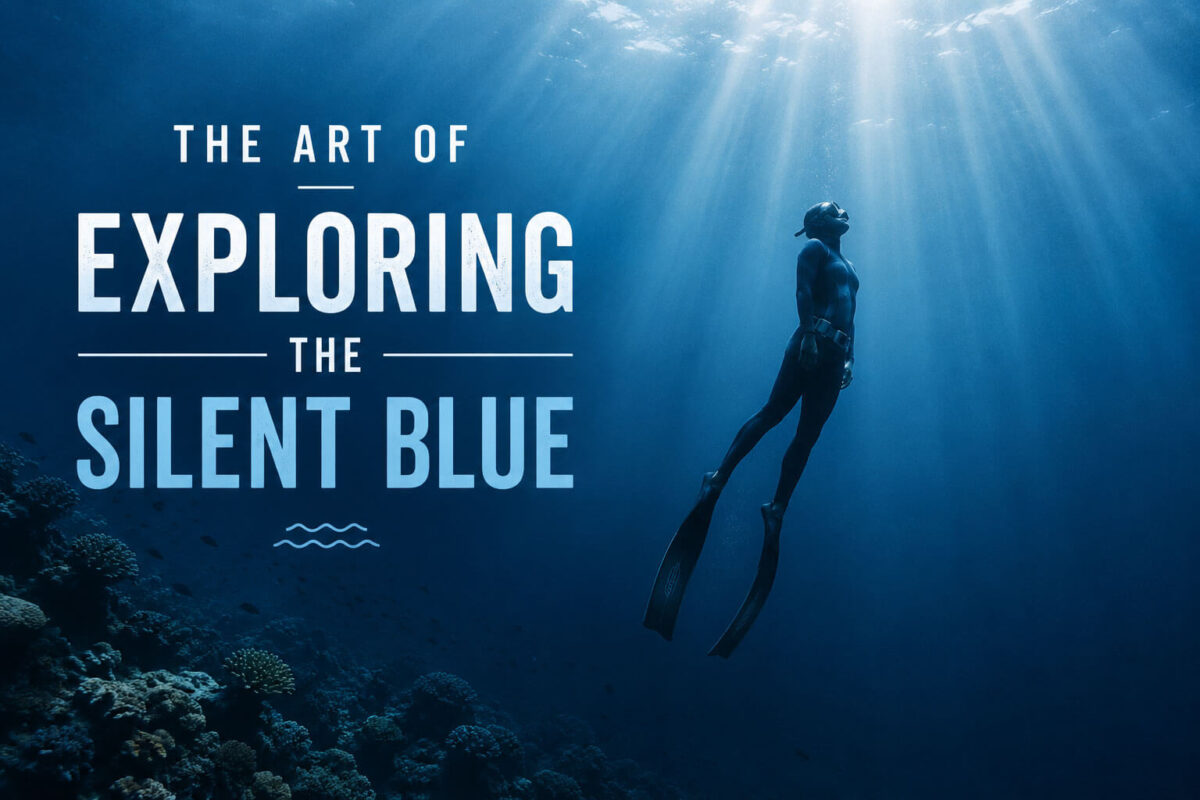
The Art Of Exploring The Silent Blue
Jul
The Art of Exploring the Silent Blue: A Complete Diver’s Guide
From your first breath-hold beneath the waves to navigating coral cathedrals at 30 metres, exploring the silent blue is one of the most profound journeys a human being can undertake — and this guide will take you every step of the way.
What Is Exploring the Silent Blue — and Why It Changes Everything
Exploring the silent blue is the act of descending beneath the ocean’s surface and entering a world defined not by noise, but by the absence of it. Unlike any other adventure on land, the underwater realm strips away the constant sensory overload of modern life and replaces it with a profound, meditative silence punctuated only by the rhythm of your own breathing or heartbeat. It is a discipline that demands equal parts physical awareness and mental calm.
The term “silent blue” captures something that veteran divers universally recognise: a specific quality of light, pressure, and peace found between 5 and 40 metres beneath the surface. The blue deepens. The sunlight fractures into cathedral beams. Sound as we know it disappears. For many, the first time they truly experience this environment is the moment they understand why ocean people speak about diving with a reverence that goes far beyond sport.
Exploring the silent blue encompasses multiple disciplines — recreational scuba diving, technical diving, freediving, and snorkelling. Each offers a different gateway into the same extraordinary world. A recreational scuba diver breathes compressed air from a tank and moves slowly through reef systems, while a freediver descends on a single breath, achieving a state of aquatic meditation that ancient cultures practised for millennia. Both are valid, both are transformative.
The ocean covers over 71% of our planet’s surface, yet more than 80% of it remains unexplored and unmapped by science. Every dive you make is, in a very real sense, an act of discovery. Whether you’re hovering above a coral garden in the Maldives or peering into a dark sea cave in Portugal, you are venturing into one of Earth’s last true wildernesses. That is the foundational pull of the silent blue — and once you feel it, you will spend the rest of your life chasing it.
“The sea, once it casts its spell, holds one in its net of wonder forever.” — Jacques Cousteau, the man who first brought the silent blue to the world’s attention.
The Science of Breath, Buoyancy, and What Happens at Depth
To truly master exploring the silent blue, you need to understand the physics and physiology at play every time you descend. The ocean is not a passive backdrop — it is an active force that reshapes your body’s chemistry, pressure tolerance, and sensory experience with every metre you gain in depth. Knowledge of these mechanisms is not optional; it is your greatest safety tool.
Pressure and Boyle’s Law
Every 10 metres of seawater adds one atmosphere of pressure to your body. At 10m you’re at 2 ATA, at 20m you’re at 3 ATA, and so on. Boyle’s Law tells us that as pressure increases, the volume of gas in your body’s air spaces — ears, sinuses, lungs — compresses. This is why equalising your ears during descent is non-negotiable. Failing to equalise can cause barotrauma, a painful and potentially serious injury to the eardrum or sinus membranes. Scuba divers manage this with their tank’s regulator providing gas at ambient pressure; freedivers manage it by carefully equalising with limited air from their lungs.
Nitrogen Narcosis and Oxygen Toxicity
Breathing compressed air at depth causes nitrogen to dissolve into your bloodstream at elevated partial pressures. Below 30 metres, many divers experience nitrogen narcosis — a state resembling mild intoxication that impairs judgement, slows reaction time, and creates a false sense of confidence. Technical divers manage this by switching to helium-mixed gases. Oxygen toxicity is a separate concern for those diving with enriched air (nitrox) or rebreathers: at high partial pressures, oxygen becomes toxic to the central nervous system, causing seizures that are fatal underwater. Understanding these thresholds before every dive is fundamental.
The Mammalian Dive Reflex
One of the most extraordinary pieces of biology relevant to exploring the silent blue is the mammalian dive reflex — a suite of physiological changes that occur when the face contacts cold water. Your heart rate slows dramatically (bradycardia), blood is shunted away from the extremities to protect the brain and heart, and the spleen contracts to release oxygen-rich red blood cells. Freedivers train to deepen and harness this reflex, achieving resting heart rates below 30 BPM at depth. It is the same mechanism used by whales, seals, and dolphins — a reminder that we are, evolutionarily, semi-aquatic creatures.
Diving Disciplines: Exploring the Silent Blue in Every Form
Exploring the silent blue is not a single activity — it is a family of related disciplines, each with its own philosophy, equipment requirements, certification pathway, and community. Understanding the differences between them helps you choose the right entry point and progress intelligently through the sport.
| Discipline | Depth Range | Certification | Level | Best For |
|---|---|---|---|---|
| Recreational Scuba | 0 – 40m | PADI Open Water / SSI OWD | Beginner | First-time ocean explorers; reef diving |
| Advanced Scuba | 0 – 60m | PADI Advanced Open Water | Intermediate | Deep wrecks, night dives, drift dives |
| Technical Diving | 60m – 300m+ | TDI / IANTD Tech Diver | Advanced | Cave systems, deep wrecks, mixed gas |
| Freediving | 0 – 60m+ (breath-hold) | AIDA 1–4 / Molchanovs Wave | Beginner–Expert | Minimalist diving; ocean meditation |
| Snorkelling | 0 – 5m surface | None required | All levels | Reef observation; children; casual ocean connection |
Safety, Rules, and the Golden Protocols of the Silent Blue
The silent blue is breathtaking precisely because it is genuinely wild. Respecting its rules is not bureaucracy — it is self-preservation. The vast majority of diving fatalities and incidents are attributable to a small set of avoidable mistakes. Every experienced diver will tell you the same thing: discipline and preparation are what separate a long diving career from a tragic statistic.
The Non-Negotiable Safety Fundamentals
Before any dive, regardless of depth or experience level, a thorough pre-dive safety check must be completed. The internationally recognised acronym is BWRAF — BCD (buoyancy control device), Weights, Releases, Air, Final check. This five-point check takes under three minutes and has saved countless lives. Additionally, divers should always complete a surface check of conditions: current direction, visibility, boat traffic, and weather.
Ascent Rates and Decompression
Ascending too quickly is one of the most dangerous things a scuba diver can do. As you rise, dissolved nitrogen in the bloodstream expands. Ascend faster than 18 metres per minute and that nitrogen can form bubbles in the tissues and joints, causing decompression sickness (DCS) — a medical emergency requiring immediate recompression in a hyperbaric chamber. Always ascend at 9–18 m/min and perform a safety stop at 5 metres for 3–5 minutes on every dive beyond 10 metres.
The Buddy System and Emergency Protocols
Never dive alone. The buddy system is the bedrock of diving safety — your dive partner is your first line of rescue in the event of equipment failure, entanglement, or sudden illness. Establish hand signals before every dive, agree on turnaround pressure (usually 100 bar), and practice air-sharing drills regularly. For freedivers, this rule is even more absolute: surface blackout (loss of consciousness on ascent) can occur without warning and requires an in-water rescue within 30–60 seconds.
- Check your equipment: Inspect your regulator, BCD inflator, tank valve, and O-ring before every single dive — not just on the first dive of a trip.
- Dive within your certification limits: Your certification card defines the environment you are trained to survive. Exceeding those limits without additional training is statistically dangerous.
- Never hold your breath on scuba: The single most important scuba rule — a full breath held during a rapid ascent can cause arterial gas embolism, which is often fatal.
- Monitor your air constantly: Surface with a minimum of 50 bar in your tank (never less than 30). Running out of air underwater is one of the top causes of diving fatalities.
- Log every dive: A detailed logbook helps you identify patterns, track nitrogen loading, and document certifications required by dive operators worldwide.
How to Start Exploring the Silent Blue: A Step-by-Step Journey
Beginning your exploration of the silent blue can feel overwhelming when you look at the full landscape of certifications, equipment, and disciplines. But the actual journey — step by step — is beautifully logical. Here is the proven path taken by millions of divers from zero experience to genuine ocean competence.
Complete a Discover Scuba Diving (DSD) or Pool Freedive Session
Before committing to a full certification, book a single-day introductory session with a certified dive centre. In a DSD session, an instructor will brief you on basic equipment and take you to a maximum depth of 12 metres in open water. This experience lets you feel the pressure, the weightlessness, and the silence before deciding which path to pursue. Most people who complete this session are immediately and permanently hooked.
Choose Your Certification Path and Enrol
For scuba, PADI and SSI are the two most globally recognised agencies. Their Open Water Diver courses typically take 3–4 days and combine classroom knowledge (now available online), confined water skill practice in a pool, and four open-water dives. For freediving, AIDA International and the Molchanovs system are industry standards. The AIDA 1 and 2 courses can be completed in a weekend and teach breath-hold safety, technique, and equalisation fundamentals.
Invest in Your Own Mask, Fins, and Wetsuit
Rental gear is perfectly acceptable for your certification dives, but your mask is the most important piece of personal kit to own from day one. A mask that fits your face perfectly — tested by inhaling through the nose to create a seal — changes the entire diving experience. Invest in a quality pair of freediving fins if you choose that path (long-bladed), or open-heel scuba fins if you go the tank route. A 3mm wetsuit suits tropical destinations; 5–7mm for temperate waters.
Log 20–30 Dives in Varied Conditions to Build Experience
Your certification card proves you have completed basic training — it does not make you an experienced diver. The ocean teaches through repetition. Aim to dive in different conditions — mild current, reduced visibility, night diving, deeper reefs — under the guidance of experienced divers or a divemaster. Each dive teaches you something a classroom cannot: how your body responds to pressure, how to read water movement, and how to remain calm when conditions shift unexpectedly.
Pursue Specialty and Advanced Certifications
Once you have your foundational experience, the diving world opens up dramatically. The PADI Advanced Open Water course adds deep diving (to 30m) and navigation skills. Specialty courses cover wreck diving, underwater photography, night diving, drift diving, and marine biology identification. Technical diving certifications (TDI, IANTD) are available for those seeking to explore beyond recreational limits. Every certification adds tools — and every tool opens new parts of the silent blue that were previously inaccessible to you.
Plan Your First Liveaboard or Dive Destination Trip
There is a significant leap between diving your local quarry and diving in clear, warm, wildlife-rich ocean. Planning your first dedicated dive trip — whether to the Red Sea, the Maldives, Indonesia’s Coral Triangle, or the Caribbean — crystallises everything you have learned into a single immersive experience. Liveaboards (dedicated dive boats where you sleep aboard and dive multiple times daily) provide the highest dive density and access to remote sites unreachable from shore. This is where exploring the silent blue becomes a defining life chapter.
Essential Gear for Exploring the Silent Blue
The right equipment is the interface between you and the underwater world. Poorly fitted or low-quality gear creates problems that compound dangerously at depth. Understanding what each piece of equipment does — and why quality matters — helps you make informed investments that will last years and keep you safe across thousands of dives.
The World’s Best Destinations for Exploring the Silent Blue
Not all ocean is created equal. The convergence of warm water, high marine biodiversity, excellent visibility, and accessible infrastructure creates a handful of destinations that every serious diver holds as landmarks in their journey. These are the places where exploring the silent blue becomes a life-defining experience.
- Raja Ampat, Indonesia: Considered by marine biologists to contain the highest marine biodiversity on the planet, Raja Ampat sits at the apex of the Coral Triangle. Over 1,500 fish species and 700 coral species inhabit its reefs. Manta rays, whale sharks, walking sharks, and pygmy seahorses share the same ecosystem. Visibility regularly exceeds 30 metres. Diving here is widely described as seeing the ocean as it existed before humans — an undisturbed, staggeringly rich underwater wilderness.
- The Maldives: The Maldives offers two distinct silent blue experiences — shallow coral atolls teeming with reef fish, turtles, and rays, and deep channel walls where oceanic giants including whale sharks, hammerhead sharks, and eagle rays patrol the blue. The Maldives is one of the premier destinations for live-aboard diving, allowing access to remote outer atolls that day-trip boats cannot reach.
- The Great Barrier Reef, Australia: The largest living structure on Earth stretches over 2,300 kilometres and contains over 2,900 individual reefs. Dive sites range from shallow lagoons ideal for beginners to dramatic outer-wall drop-offs descending into the abyss. Cod Hole, known for its enormous potato grouper, and Osprey Reef, famous for its shark encounters, rank among the world’s most iconic dives.
- The Red Sea, Egypt: For divers seeking exceptional visibility — often exceeding 40 metres — warm water year-round, and extraordinary wreck diving, the Red Sea is unmatched. The SS Thistlegorm, a WWII-era British freighter sunk in 1941, is consistently voted the world’s greatest wreck dive. Ras Mohammed National Park offers pristine reef walls with almost comical fish density.
- Palau, Micronesia: Palau’s Jellyfish Lake — a marine lake where millions of non-stinging jellyfish pulse through the water — is one of the most surreal snorkelling and diving experiences on Earth. Blue Corner Wall is legendary for its strong currents that attract grey reef sharks, barracuda, and giant trevally in extraordinary numbers. Palau is also famous for its WWII Japanese and American wrecks, creating an underwater war museum of haunting beauty.
- Silfra, Iceland: For a profoundly different silent blue experience, Silfra offers the unique opportunity to dive between the North American and Eurasian tectonic plates in the crystal-clear, glacially filtered water of Thingvellir National Park. Visibility exceeds 100 metres — the highest of any fresh water dive site on Earth. Temperatures hover around 2–4°C year-round, requiring a drysuit, but the other-worldly blue colour of the water and the sensation of touching two continents simultaneously is unlike anything else in diving.
Solo Exploration vs. Guided Diving: Two Paths into the Silent Blue
As divers gain experience and confidence, an important philosophical fork appears: do you continue diving with dive guides and operators, or do you develop the skills and autonomy to self-guide your underwater exploration? Both approaches have legitimate advocates and distinct advantages — and the best divers ultimately learn to operate fluently in both modes.
The experienced diver’s answer is not to choose one permanently over the other, but to use each where it fits. In a new destination or challenging environment, a local guide’s knowledge is genuinely invaluable — not a crutch, but a tool. In familiar, well-marked reef systems where you know the layout and conditions, the freedom of self-guided exploration delivers an entirely different, deeply rewarding quality of experience. The goal is developing the competence to exercise genuine choice.
Ocean Ethics, Conservation, and the Responsibility of the Silent Blue
Every person who enters the ocean carries both a privilege and a responsibility. The silent blue is not an infinite resource. It is a threatened ecosystem under extraordinary pressure from climate change, overfishing, pollution, and coastal development. Divers — precisely because they see and love the underwater world firsthand — have a unique moral obligation to understand that pressure and respond to it with integrity.
Leave No Trace Underwater
The physical impact of careless diving is measurable and cumulative. A single diver’s knee brushing a coral head can kill a colony that took 50 years to grow. Stirring silt in a cave can reduce visibility and disorient both divers and fish. The foundational principle of responsible underwater exploration is the same as wilderness hiking: leave nothing but bubbles, take nothing but photographs. Buoyancy control is not just a skill — it is your most important conservation tool. A diver who achieves perfect neutral buoyancy protects every reef they visit.
The Marine Wildlife Interaction Code
The pressure to create dramatic underwater content — particularly for social media — has created a disturbing trend of irresponsible wildlife interaction. Riding turtles, handling sea stars, touching sharks, and feeding fish for photos are not neutral acts. They cause physiological stress, disrupt feeding and mating behaviours, and in some cases have been directly linked to animal deaths. Responsible explorers of the silent blue maintain respectful distances, move slowly and predictably, and understand that observing an animal behaving naturally is always more valuable than forcing a human interaction.
- Never touch coral: Even the oils from your skin disrupt the mucus layer that protects coral from pathogens and thermal stress — already at a critical threshold due to ocean warming.
- Report marine debris: Join or support Project AWARE’s Dive Against Debris programme, which has removed over 1.5 million pieces of marine debris from ocean floors worldwide.
- Choose eco-certified operators: Select dive operators that hold Green Fins or similar certification, limiting group sizes, banning damaging anchoring practices, and educating guests on marine protection.
- Support coral restoration: Many dive centres in the Maldives, Caribbean, and Pacific now offer coral gardening dives where you assist in re-attaching coral fragments to degraded reef structures — a genuinely impactful form of citizen marine science.
- Refuse shark fin products: The shark fin trade drives the slaughter of up to 100 million sharks annually, decimating the apex predators that regulate the health of every reef ecosystem you will ever dive.
The divers who truly love the silent blue are its most powerful advocates. By combining rigorous personal ethics with active support for conservation organisations, citizen science programmes, and responsible tourism choices, we ensure that the extraordinary world beneath the waves remains intact — for the marine life that depends on it, and for every future generation of ocean explorers.
Frequently Asked Questions About Exploring the Silent Blue
A certified Open Water Diver is trained and qualified to dive to a maximum depth of 18 metres independently, and 20 metres with a professional. The PADI Advanced Open Water certification extends this limit to 30 metres — the standard recreational limit globally. Beyond 40 metres requires technical diving training. For complete beginners, a Discover Scuba Diving experience typically takes you to 12 metres under direct instructor supervision. These limits are set because nitrogen narcosis, air consumption rates, and decompression risk all increase significantly with depth — and the training at each level specifically prepares you to manage those realities safely.
Freediving is extremely safe when practised within certified training frameworks and with a qualified buddy. The danger in freediving comes almost entirely from shallow-water blackout — a loss of consciousness caused by hypoxia during ascent — and this risk is effectively managed by the fundamental rule of never freediving alone. An AIDA or Molchanovs Level 1 course teaches participants to safely achieve breath-holds of 2–3 minutes and depths of 10–20 metres within the first weekend. The training includes blackout recognition and in-water rescue protocols, which are practised in a pool environment before any open water diving. Freediving without training or a qualified buddy, however, is genuinely dangerous.
PADI and SSI both offer a Junior Open Water Diver certification for children aged 10–14, which certifies them to dive to 12 metres with an adult diver. At 15, young divers can upgrade to a standard Open Water certification with full adult privileges. There is no upper age limit for diving provided you are in reasonable health — thousands of divers in their 60s, 70s, and even 80s actively explore the ocean. A medical questionnaire is completed before certification training, and anyone with cardiovascular conditions, respiratory issues, or diabetes should consult a dive medicine physician before diving. Age is far less relevant than fitness and calm temperament.
Ear equalisation is the process of adding air to the middle ear space to match the increasing water pressure during descent, preventing the eardrum from being pushed inward. The most reliable method is the Valsalva manoeuvre: pinch your nose closed and gently blow against it, as though blowing your nose softly. You should feel and sometimes hear a gentle pop or crackle as the Eustachian tube opens. Equalise frequently — every metre of descent if needed — and never force it. If you cannot equalise, ascend 1–2 metres and try again. Continuing to descend with ear pain will cause a middle ear squeeze (barotrauma), which can rupture the eardrum and may require weeks of recovery and medical treatment.
The species you encounter depend enormously on location, depth, and season, but globally the most commonly encountered marine life includes reef fish (parrotfish, triggerfish, angelfish, clownfish), sea turtles (both green and hawksbill turtles are found across tropical reefs), moray eels, octopus, reef sharks (whitetip and blacktip are the most frequently seen), and a dazzling variety of nudibranchs and invertebrates. Dolphins frequently join divers in open water. In temperate destinations like the UK, California, and New Zealand, divers encounter seals, kelp forests, and endemic cold-water species equally extraordinary in their own right. The variety is essentially endless — no two dives are ever the same.
A PADI or SSI Open Water Diver certification course costs between $350–$600 USD in most dive destinations, with prices varying by location. Diving in Southeast Asia (Thailand, Indonesia, the Philippines) typically offers the lowest certification costs globally — often $250–$350 — in genuinely excellent conditions, making it popular for certification trips. Equipment rental is included in the course fee at most dive centres. If you choose to invest in personal gear, a starter kit of mask, fins, and wetsuit costs $150–$400; a full personal equipment setup including regulator, BCD, and computer costs $1,500–$3,000+. Ongoing diving costs include tank fills ($10–$20 per dive), boat fees, and accommodation. For those who love the ocean, it is widely considered one of the best value-per-experience activities available anywhere.
